
Bruxism in Medellín: Understand Your Jaw and Protect Your Smile
A thoughtful dental assessment can help protect your teeth and clarify the next step for your oral health.
Bruxism is the repeated clenching or grinding of the teeth. It can happen while you are awake or asleep, and may go unnoticed until changes appear in your teeth or jaw.
At Alejandra Hurtado’s dental practice in Envigado, Medellín, we take time to understand your symptoms, examine your teeth and discuss care options suited to your needs.
Book a dental assessment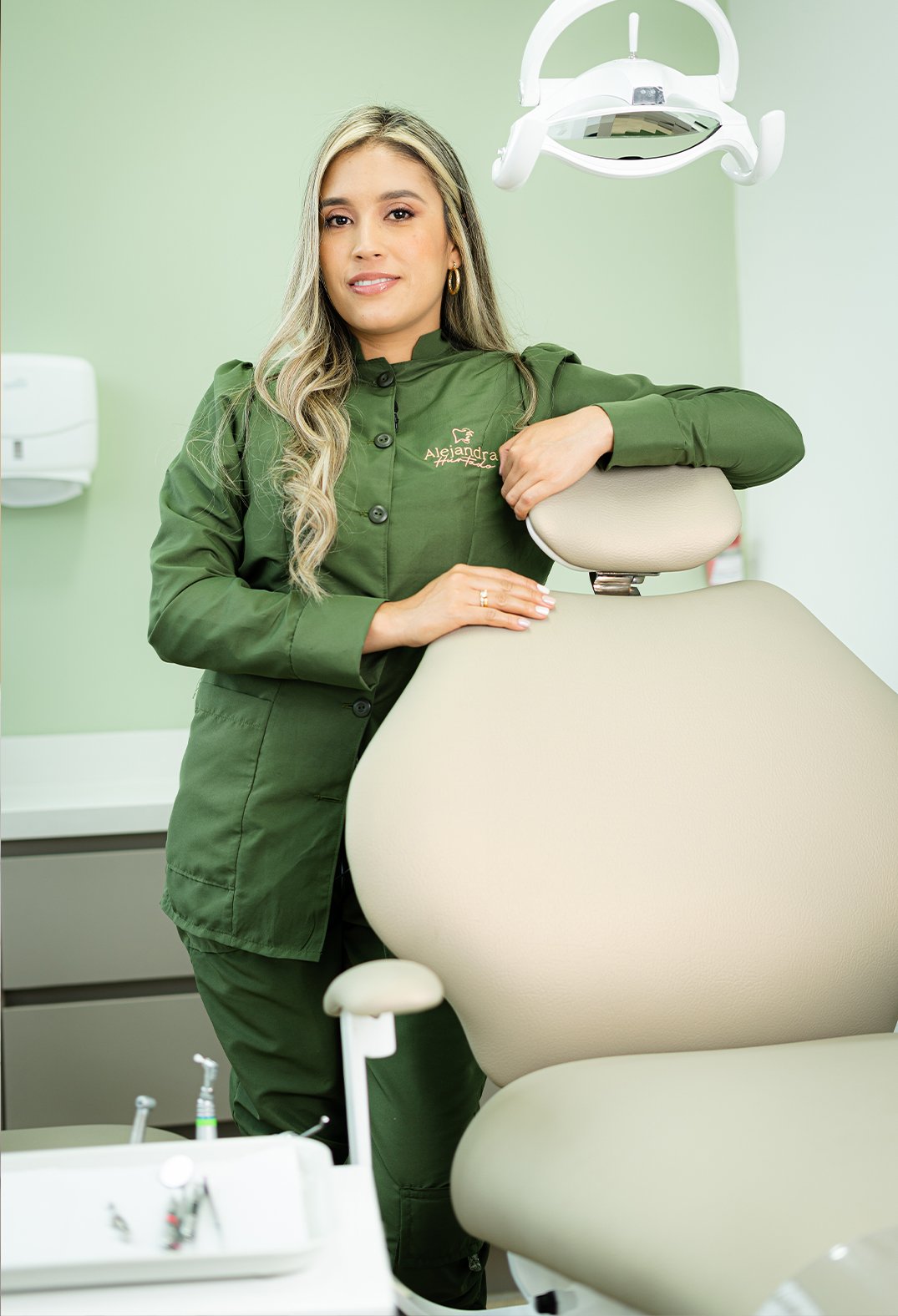
Dental care in Envigado, Medellín.
What is bruxism?
Bruxism refers to repeated teeth grinding or clenching, or holding tension in the jaw. Some people notice it during the day; others learn about nighttime grinding from a partner.
Bruxism does not always cause damage or require treatment. When it is frequent or forceful, it may be associated with tooth wear or fractures, sensitivity, tired or sore jaw muscles, and headaches.
It can happen in two ways
An assessment can help identify when it happens and whether it is affecting your oral health. Bruxism has no single cause and should not be attributed to stress alone.
Awake bruxism
Clenching your teeth or tensing your jaw while concentrating, feeling under pressure, or going about your day.
Sleep bruxism
Grinding or clenching your teeth while asleep, often without realizing it. A bed partner may be the first to notice.
Signs worth having checked
No single symptom confirms bruxism. A dental visit can put the signs in context alongside your health history and the condition of your teeth.
In your teeth
Worn or flattened surfaces, chipped or fractured teeth, sensitivity, or dental restorations that have been damaged.
In your jaw
Jaw muscle tension, soreness, or fatigue, especially on waking or after periods of clenching.
In your head or face
Headaches or facial discomfort. These symptoms can have other causes, so they should be assessed in context.
Has someone heard you grind your teeth at night, or have you noticed sensitivity or wear? Bring it up at your next dental appointment.
Your assessment starts with listening
There is no one-size-fits-all solution. First, we work to understand what you are experiencing, what discomfort you have, and whether there are signs of dental damage.
During your visit, we may discuss your health history and when symptoms occur, and examine your teeth, restorations, and jaw discomfort. If another concern may be involved, additional evaluation may be recommended.
Tell us what you have noticed
Pain, tension, sensitivity, when it happens, and any recent changes. It can also help to mention if someone has heard you grind your teeth in your sleep.
We examine your teeth and jaw
We look for signs of wear or damage and assess the discomfort you describe as part of a dental examination.
We discuss options with you
Depending on the findings, we can discuss dental protection, habits, and follow-up. Your care plan is shaped around your needs.
Care options depend on your needs
The aim is to protect your oral health and address the concerns identified during your assessment. Recommendations may include more than one approach.
Protecting your teeth
Your dentist may consider a custom-fitted oral appliance to separate the teeth and help reduce the risk of damage. Its design, use, and follow-up should be individualized; it does not by itself address every factor linked to bruxism.
Awareness of daytime habits
If you clench during the day, noticing the habit and keeping your teeth apart when you are not eating may help. Sleep routines and stress management can also be discussed during your assessment.
Addressing tooth wear
If a tooth or restoration is damaged, your dentist can assess what care may be needed and when. Any repair should be planned with the underlying concern and long-term protection in mind.
Do not stop or change prescribed medication on your own. If you think a medicine may be affecting your grinding, speak with the clinician who prescribed it.
Frequently asked questions about bruxism
Does bruxism only happen during sleep?
No. Bruxism can also happen while you are awake, when you clench your teeth or keep your jaw tense without noticing.
Does bruxism always need treatment?
Not necessarily. Some cases are mild. Whether care is needed depends on your symptoms, any tooth wear or damage, and your clinical assessment.
Can a night guard cure bruxism?
An oral appliance may help protect the teeth in some cases, but it does not necessarily stop the habit or address every contributing factor. A dental professional should recommend and monitor its use.
Is stress the only cause of bruxism?
No. Several factors may be involved, including stress, sleep habits, caffeine or alcohol use, tobacco, family history, and some medicines. The cause is not always clear.
When should I book an assessment?
Consider a visit if you notice tooth wear or sensitivity, jaw soreness or fatigue, facial discomfort or headaches, or if someone tells you that you grind your teeth in your sleep.
Where can I get a bruxism assessment in Medellín?
Alejandra Hurtado’s dental practice is in Envigado, in the Medellín metropolitan area. You can request a dental assessment to discuss your symptoms and suitable care options.
Start by understanding what is happening
A dental assessment can help review possible signs of bruxism and discuss care options suited to your oral health.
Request an assessmentAlejandra Hurtado Dental Practice
Cra. 48 #46A Sur–107, Office 1217
Envigado, Colombia
Phone: +57 324 566 9010
